
Let’s talk about delimbing and bucking processors. These processors are designed to convert downed trees into logs that are convenient to transport and utilize. For example, in most instances they fell tree trunks that are up to 76 cm wide. They then strip the limbs and cut the trunk into standardized lengths for shipping or milling. We call this cut-to-length processing. It allows significantly more control over log size and quality. This process serves the needs of mills and other buyers and reduces waste.
There are two main kinds of processors: stationary and mobile. Delimbing and bucking processors can be stationary, established in one location, typically a landing or other centralized location within the forest. These are great when you have a bunch of trees coming in from various locations. They are most effective when the terrain is rugged or the trees are scattered. Mobile processors travel the site. These can operate directly at the tree fall location. Mobile variants are commonly tracked or wheeled, enabling them to tackle challenging terrain and inclines. This allows logs to be processed near the tree, reducing the labor involved.
The primary objective of these machines is to speed up and streamline the work of forestry teams. Delimbing processors employ rugged blades or rollers to remove limbs all at once. Bucking is the process of a saw cutting the trunk into specific lengths. There are machines that perform both tasks simultaneously. For instance, our G501HD and 3156G are designed for demanding tasks, capable of slicing through dense trunks and processing coarse timber. With 1532 and 054 among other models with different specs, buyers can find the best fit. These specs are important because they determine what size tree you can process, how fast you can work, and what sort of logs you can yield from each tree.
When timber harvesting, delimbing and bucking processors require less work with chainsaws and less time on manual labor. It means more safety, as workers spend less time near shifting logs or sharp blades. With the correct machine, crews can have logs debarked and bucked to exactly the right size every time, which keeps mills humming. These processors aren’t for just the big logging companies. Smaller crews use them too, particularly when they deal with gnarly trees or in locations where other machines can’t reach. Every processor has a spec sheet that demonstrates its capabilities so purchasers can align a machine with their site and requirements.
Delimb and chip processors require more than just sharp blades and powerful motors. What distinguishes these machines are the details that define their practical utility. Automated measuring systems provide precise log lengths. This reduces waste and helps maintain load consistency. Multi-speed feed rollers allow you to match the speed to the size and hardness of each log. From thick bark to small branches, adjustable knives mean you never have to pause for a tool swap.
A dual feed is a must for gentle but steady log movement. That shields not just the machine but the wood, which is important for quality control. As some units consume as many as seven feed holes, it gives superior traction and more direction. About: Critical features for fast performance. This can really add up in terms of processing speed and smoothness, particularly when processing heterogeneous-sized stock.
Processing power counts as well. For instance, a 1,500 kg/h model completes work quicker than a 900 kg/h equivalent. Power users, investigate this spec first. Power is the other emphasis. A 3,000 W motor can muscle through thicker wood than one rated at 1,500 W. Choose the appropriate motor for your liebevolle.
Cleaning and maintenance encroach on work hours. Tool-free systems allow you to open, clean out, or replace parts without searching for wrenches. This reduces downtime and keeps everything flowing. Certain models include tool-free knife adjustment or easy-access covers. These little touches count the most in busy shops or remote sites where every minute is precious.
If you’re moving lots of wood, choose a processor that integrates with conveyor belts. This reduces manual hauling and saves time. It assists in maintaining logs in order as they progress along the line. Each efficiency counts, particularly on large projects.
Design defines how and where you can use your machine. Table-top models with wheels can be scooted around a yard or job site easily. Fixed units work for permanent installations. If you’re working on slopes or undulating terrain, search for a processor rated for as much as a 55% grade. This provides greater flexibility in arrangement, be it in woods or along a highway.
Controls are more than buttons; they drive output. Operator-friendly layouts translate into less training and fewer mistakes. Big, clear screens and grouped controls help keep your eyes on the work, not hunting for the right switch. Cabs with excellent sight lines and ergonomic seats keep operators alert and reduce fatigue.
A checklist to help align your processor with your needs. # How to pick the right one: Must-haves like automated measuring, dual feed, high processing capacity, tool-free parts, conveyor compatibility and grade suitability. Prioritize them by what is most important to your work. That way, you shop smart and don’t blow your budget on things you won’t utilize.
Delimbing and processing machines range from small to large, just like the jobs they’re built for — everything from thinning to large log handling. Every model is sculpted by specifications that influence its field performance. These main specifications include engine power, maximum cutting diameter, feed speed, and weight. Performance can vary greatly based on these specifications, so it’s worth checking out the specifics side by side.
Model | Engine Power (kW) | Max Cut Diameter (mm) | Feed Speed (m/s) | Weight (kg) |
ProDelim 330 | 96 | 650 | 5.2 | 2,780 |
| BuckMaster 210 | 82 | 600 | 4.8 | 2,300 |
| TimberEase X4 | 105 | 700 | 5.5 | 2,950 |
| LogPro 470 | 120 | 750 | 5.0 | 3,200 |
Engine power lies at the core of these beasts. For light to mid-sized work, a model such as the BuckMaster 210 with 82 kW can power through softwoods and smaller stems. For larger wood or quicker turns, TimberEase X4 and LogPro 470 shine, producing 120 kW. The maximum cutting diameter indicates what size log the processor can handle in a single pass. For big hardwoods, you’re going to need a LogPro 470 with a 750 mm capacity, while 600 mm models will suffice for plantation thinning. Feed speed counts for efficiency. A speed of 5.5 m/s on TimberEase X4 can shoot logs quickly through the head and comes in handy when high production is required. Weight impacts the kind of carrier you’ll need as well as stability on rocky terrain. Lighter units such as BuckMaster 210 are more convenient to attach to smaller excavators or track carriers. Heavier ones like LogPro 470 require a bigger base but provide more stability for big logs.
Carriers and flexibility
While most modern processors can hitch onto both excavators and purpose-built forestry carriers, size and hydraulic flow should align. For instance, ProDelim 330 can operate 20 to 25 tonne excavators, whereas TimberEase X4 performs best on 25 tonne and up. BuckMaster 210 is frequently paired with smaller tracked bases for thinning jobs. Universal mounts and plug-and-play setups are par for the course, but always verify your hydraulic oil flow and pressure requirements prior to fitting for seamless work.
Warranty terms secure your investment. TimberEase X4 features a 2-year or 3,000-hour warranty. BuckMaster 210 and ProDelim 330 have 1-year standard coverage. Certain brands allow you to purchase additional years for a fee. Optional attachments can change how you use each processor: top saws for short log cuts, extra feed rollers for tough bark, or automatic chain oilers to stretch chain life. LogPro 470, for example, cites auto-lubrication and measuring wheel kits as add-ons, which assist with both velocity and cut precision.
To compare processors for delimbing and bucking, it’s useful to see real-world numbers and features. Cycle times, throughput rates, and log quality output are just some of the key specifics that define how a machine performs in the woods. For instance, chips with shorter cycle times can complete more work in less time. Some are designed to go through logs one-by-one with a hydraulic chainsaw and splitting ram, which makes firewood processing much quicker and simpler. This holds particularly true if the machine is equipped with a solidly constructed output chute and conveyor. These characteristics shift the firewood easily, reducing jams and saving time lost between slices.
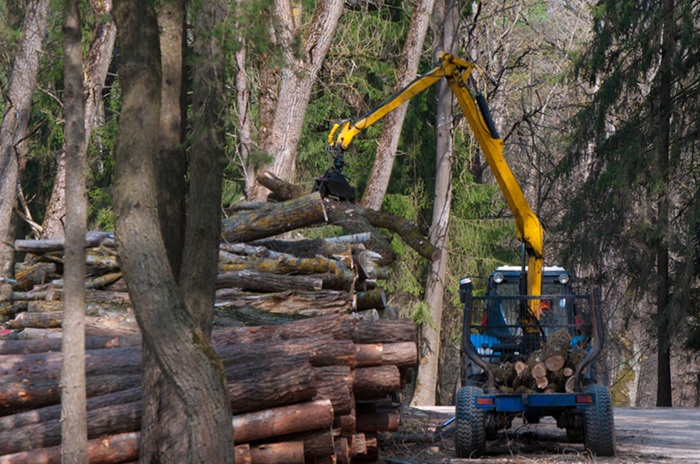
Throughput differs by design, power source, and log size. Powered by a robust hydraulic system and with a crane measuring up to 10 metres in height, these machines can tackle selective thinning with much greater flexibility. This type of access allows the operator to select trees for felling, maintaining a healthy forest and accelerating the work. The cut-to-length logging method, used by many of these processors, is especially efficient. In this approach, just two machines are required for work that would require three or four in the tree-length approach. This means less fuel burned, each harvested cubic meter costing less and less downtime moving equipment around. It keeps transport distances short because logs are cut-to-size in the woods, so they do not have to be transported to another facility for that stage of processing.
Automation is a big part of how modern processors reduce manual labor and errors. Among others, most models have sensors that measure log length, diameter, and quality. This causes the work to be more precise and results in fewer mistakes in sorting and cutting. Certain processors will even make the cut automatically, which helps maintain consistent log length and minimizes waste. When sensors couple with smart controls, operators spend less time cross-checking work and more time operating the machine. That reduces the injury risk and allows operators to concentrate on logistics and security.
To make sure a processor keeps performing well, it is smart to track a set of clear, simple key performance indicators (KPIs):
Processor versatility is important for those looking for delimbing and cutting options that accommodate diverse forestry requirements. Equipped properly, a single processor can perform multiple functions, cut multiple species of trees, and assist operators in maximizing their return on investment. Many processors out there these days are designed with flexibility in mind so you can switch gears seamlessly and do more work with fewer blocks.
Interchangeable head options play a big role in this flexibility. These head choices assist users in coping with a blend of tree species and log diameters without having to swap out to another machine. Processors with this feature often include:
Quick-change tool systems assist in raising versatility. These systems allow operators to swap heads, blades, and discs in the field without requiring special tools or downtime. Modular means components can be exchanged or repaired with minimal hassle, which reduces downtime and keeps the work flowing. Other models utilize removable disc stems and flat lids, making maintenance and part swaps easy. That’s excellent for users who hop from one type of task to another or require machines that can adapt with shifting workloads.
Selecting a multi-function processor enables purchasers to enjoy the most for their buck. Multi-functional processors can limb, buck, shred and shape logs with the same base unit. Variable speed settings and variable speed control empower users to customize the cutting speed to the wood, whether it is hard, dense hardwood or softer, wet material. A few machines provide wet and dry processing, so that they perform optimally in all weather and with various wood moisture levels.
A processor’s architecture influences its flexibility. Small, light versions are simpler to lug from job to job and jam into cramped spaces. This is great for crews in the field in remote locations. Processors with an interchangeable selection of disc types, such as slicing or shredding discs, can accomplish more jobs without adding additional equipment. Interchangeable parts are another advantage. They assist users in transferring to new tasks and minimize the need for hot spares.
Feed entry size counts as well. With various feed openings, one and the same processor is able to ingest logs of different shapes and diameters, which allows the entire process to be more fluent. Easy cleaning and care. For those additional easy, look for units with removable parts and covers.
Maintenance tips for delimbing and bucking processors Keeping delimbing and bucking processors in tip-top shape is crucial for safe, smooth, and long-lasting use. Over the past half-century, machine manufacturers have made huge strides in control systems, comfort, and fuel efficiency, meaning that adhering to a good maintenance schedule is more vital than ever. The stakes are high. When the harvest window is narrow because of wet soils or fire risk, a couple of additional days of uptime can really make a difference. A maintenance plan prevents breakdowns, reduces cost, and encourages consistent workflow whether you’re operating single-grip harvesters, forwarders, or winch-assisted operations for steep terrain.
Daily checks should be easy but comprehensive. Examine blades for sharpness and nicks, feel rollers for smooth turn and grip, and inspect all hydraulic lines for leaks or deterioration. Shake or clean debris from head and undercarriage to keep moving parts free. Grease all fittings according to the manufacturer’s chart. Top off fluids, including hydraulic oil, coolant, and fuel. Ensure safety features such as guards and emergency stops function correctly. These steps catch small problems before they become big. In cold, wet, or dusty locations, these inspections become even more important.
Weekly maintenance digs a little deeper. Re-torque all bolts and fittings, inspect welds for cracks or stress, and examine hoses for swelling or soft spots. Test the electronics and sensors for proper reading. Wash down radiators and air filters to keep the engine cool and dust free. Oil the major joints and bearings and inspect tire or track tension. Clean out the cab with the windows and mirrors clear for safe sight lines. Go over the maintenance log and look for strange patterns or repeated repairs.
Seasonal or annual cleanings get the processor ready for job and weather changes. Swap out worn blades, rollers, and hoses. Drain and replace hydraulic and engine oils wholesale as per maintenance intervals. Check undercarriage components for rust or fatigue and replace bearings if they are loose. Update machine software if necessary to keep controls snappy and current. Keep spare parts and fluids in a dry, safe location. In places such as the Baltics, where harvesters and forwarders operate around the year, this deep care keeps the fleet prepared for the upcoming 33 million cubic meters season.
A simple checklist keeps things on track:
Operators should always follow the manufacturer’s manual. That includes operating the machine within established loads, not exceeding rated specs, and applying appropriate cutting speeds to each species. Each operator knows the safe startup, shutdown, and emergency stop procedures. Training counts—well-trained crews identify issues sooner and operate safer and faster. In the US Northeast and Lake States, where CTL harvesters now conduct more than 70 percent of annual cuts, expertise and practice count.
Processor machines for delimbing and bucking are equipped with several safety and environmental measures designed to reduce hazards to humans and nature. Both of them include safety features such as emergency stop buttons, guards on moving parts, and audible warning alarms. These controls allow workers to respond quickly if anything does go awry. Safety and environmental guards cover sharp blades and chains, which prevents injuries during use and maintenance.
Warning alarms ensure all persons in proximity are aware when the machine is going to reposition or initiate a new operation. Regarding safety and environmental considerations, for cut-to-length machines, having fewer moving parts and just two primary machines operating onsite reduces the risk of injuries when compared to multi-machine operations with more boots on the forest floor.
We all know that noise and dust are a big bother for operators and anyone in the vicinity of the work site. Most processors employ soundproof covers or insulated operator cabins to reduce noise. These reduce the danger of hearing impairment and extend endurance on long shifts. Dust suppression systems, such as water sprays or enclosed saw blades, prevent fine particles from becoming airborne. This preserves cleaner air, which is important to both your lungs and your equipment. In reducing dust and noise, they facilitate crews working in proximity to homes or wildlife, where stringent noise and air regulations are common.
More eco-friendly hydraulic fluids and low-emission engines are standard. These fluids degrade more readily in the environment, so if spilled, the impact on soil and water is lower. Fuel-efficient, lower emission engines help achieve world objectives to reduce air pollution. The cut-to-length approach results in reduced diesel consumption per cubic meter of wood, reducing greenhouse gas emissions. Shorter trips to transport wood from the forest to the mill reduce fuel consumption further. This can assist firms in complying with domestic and global regulations on climate change and pollution.
Adhering to safety protocols and ethical forestry standards is important for legal reasons and sustainable forestry as well. Almost all jurisdictions require operators to verify and comply with regional safety regulations, which may involve training employees, regular inspections of the devices, and rigorous lockout procedures during maintenance. Cut-to-length is good for the land. It enables trees to be felled and milled individually, causing less damage to surrounding vegetation and earth. With a crane reach of as much as 10 meters, operators must walk around to scout the area before skidding logs or cutting to keep people and animals safe. This promotes selective thinning that maintains healthy forests and reduces the risk of fire. Making more bolts in early thinning means more efficient utilization of each tree and less waste. With this model, crews can tailor thinning and felling to what the local forest requires, maintaining a diversity of tree species and promoting the ecosystem.