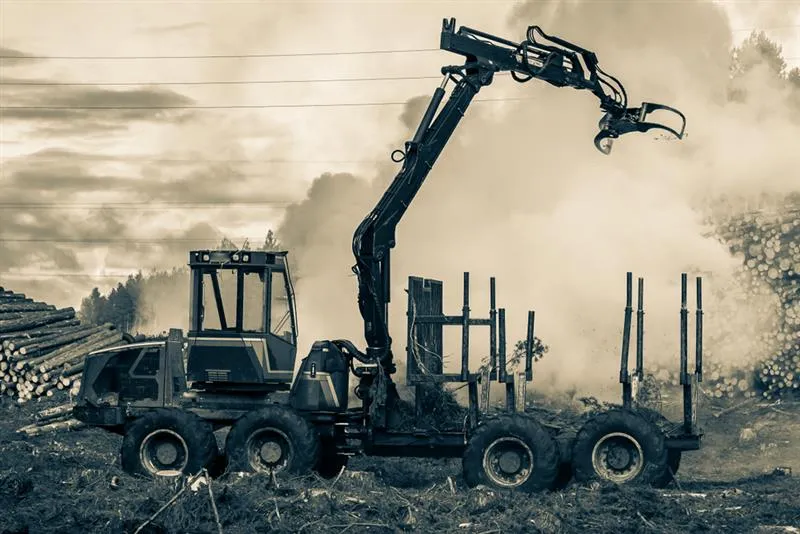
Cut-to-length harvesters are a crucial part of modern forestry work. Their main job is simple: they cut trees and process them right on-site into set lengths. This work is accomplished by one piece of equipment, which seizes, chops, and delimb the branches and cuts the stem into bolts or logs. Different from the tree-length method, in which trees are felled and transported intact to a separate location for processing, this process performs the lion’s share of the work where the tree falls. That translates into less gear and fewer processes between felling and loading.
Their reach is broad. Cut-to-length harvesters are effective on a variety of tree species, ranging from softwoods such as pine and spruce to hardwoods including birch and poplar. Their design allows them to navigate through thick stands and rugged terrain, including wet or steep slopes that larger equipment would have difficulty navigating. For example, smaller harvesters can work in young stands for early thinning, producing numerous short bolts at speed. Bigger models process mature trees in large-scale clear-cuts. Both types can be fitted with tracks or tires to fit soft or rocky ground, demonstrating their application in virtually any forest worldwide.
On job sites, the cut-to-length system often outperforms old methods. With the tree-length method, crews need three or four machines: a feller, a skidder, a delimber, and a loader. With cut-to-length, only two machines are needed: a harvester and a forwarder. The harvester cuts and trims, and the forwarder brings the logs out to the road. This configuration reduces fuel consumption per cubic meter because fewer machines are operating and each tree is processed a smaller number of times. In a thinning job, the harvester can create more bolts from each tree than the tree-length method and therefore more mill-ready wood and less waste in the woods.
Sustainability is a big bonus for cut-to-length harvesters. They simplify the stewardship of our forests. By cutting logs to standardized lengths in the forest, operators can segregate wood by quality and application, reducing waste. Logs remain cleaner and less bruised, as they are not being dragged on the ground. This maintains high wood quality and reduces the risk of rot or loss. The procedure causes less damage to soil and standing trees, which is crucial for sustained forest vitality. The technique, commonly associated with the Nordics, has disseminated across the globe as additional crews seek to harmonize efficiency and attention in the woods.
These machines just keep getting smarter. Most include tools such as sensors, GPS, and data links. These capabilities assist operators in monitoring tree diameters, log lengths, and job progress in real-time. To that end, with automation, the work becomes both faster and more accurate, reducing waste and ensuring every log perfectly matches customer desires.
Buyers considering cut-to-length harvesters should pay close attention to a couple of important specs. These specifications go a long way in illustrating how well a particular machine will fit various jobs, what size trees it can process, and how simple it will be to operate and maintain. Here are the key specs most buyers look for before selecting.
Getting a transparent vision of a cut-to-length harvester’s actual condition is the most important factor in any purchase decision. Even with killer specs, a machine’s worth can come down to how it’s been maintained and its history, not just meter hours. Service logs and repair notes, if available, are the first things to look at. These indicate how the machine was maintained and whether or not large components were replaced or repaired. A nice paper trail with dates, what was done and part numbers provides comfort. If holes appear or significant repairs are absent, it’s reasonable to request additional details or documentation from the seller. Some sellers maintain digital logs, while others rely on good old-fashioned paper. Either way, the more detail, the better.
Wear parts speak for themselves. Saw bars, rollers, and hoses are all high-wear spots on a harvester. If these parts appear battered or salvaged, it can signify tough mowing or missed servicing. Saw bars with deep grooves or uneven wear might indicate an alignment problem or skipped lubrication. Rollers with dents or a rough finish may not feed logs nicely or could jam. Cracked, leaky, or stiff-spotted hoses ultimately cause downtime and safety hazards. It pays to request close-up photos or videos of these spots if you’re unable to view the machine in person. Some buyers even dispatch a local mechanic to inspect these components.
Key aspects to examine when looking at machine condition and maintenance history:
If you can, obtain a recent inspection sheet or third-party check. Certain dealers include this with the sale and others will allow you to hire a local service tech. Such reports provide an unvarnished view of the machine’s actual condition, generally including positives as well as vulnerabilities. A third-party evaluation can identify issues overlooked in the seller’s notes. If no report is available, it’s wise to request one or incorporate the risk into your bid.
Selecting the appropriate cut-to-length harvester involves considering more than just size and engine power. The degree and kind of automation and tech in a harvester can influence how well it suits your needs, today and into the future. Each feature has its own costs, maintenance, and support requirements. It’s crucial to balance them against the ways they may transform your work processes, team, and finances.
A lot of today’s harvesters are automatically measuring, cutting, and datalogging. Automatic measuring enables machines to size logs on the fly, reducing manual labor and minimizing errors. Cutting automation refers to the harvester being able to saw logs into fixed lengths without continuous operator intervention, which serves to maintain consistent production and minimize waste. Data logging systems capture information such as tree count, log size, and machine utilization. These stats can inform business decisions and identify trends or problems early. For instance, the John Deere 1270G features TimberMatic Maps for real-time log tracking, while Ponsse Scorpion King boasts active crane balancing for smoother work. As you consider these options, be sure to review how much support and maintenance they will require and if your team will require additional training.
Guidance systems have made big advances. GPS-assisted navigation simplifies running machines over large or difficult terrain, reducing overlaps or skipped areas. A few models tack on terrain mapping, which allows the machine to “anticipate” slopes or rugged terrain. This helps plan safer, faster routes and can spare the machine additional wear. For example, Komatsu 931XC has a full GPS package for steep slopes. EcoLog 688F has smart terrain mapping for wet ground. It is good to see if these systems work with your existing fleet or software because new tech can mean huge shifts in how you run your jobs.
Telematics is another powerful solution for remote monitoring and machine health. With telematics, you can monitor fuel consumption, engine hours, and even receive maintenance reminders. Others, such as John Deere’s JDLink or Komatsu’s MaxiFleet, allow you to monitor the harvester remotely from your office or phone. It aids in quicker troubleshooting and maintains minimal downtime. Telematics introduces new considerations around data security, continued support, and whether your team is prepared to act on the new information.
Below is a table that compares features and tech options in some common cut-to-length harvesters:
Model | Auto Measuring | Bucking Automation | Data Logging | GPS Navigation | Terrain Mapping | Telematics | Support Needs |
John Deere 1270G | Yes | Yes | Yes | Yes | No | JDLink | Moderate |
Ponsse Scorpion King | Yes | Yes | Yes | No | Yes | Active Crane | High |
Komatsu 931XC | Yes | Yes | Yes | Yes | Yes | MaxiFleet | Moderate |
EcoLog 688F | Yes | Yes | Limited | No | Yes | Basic | Low |
When peeping these bad boys, it’s savvy to see if the tech complements your existing solutions and can scale as your needs evolve. Initial expenses may be significant, yet improvements in efficiency, security, and definitive information can compensate. Any automation or tech changes should incorporate input from field employees, IT, and managers, as these alternatives can change job responsibilities and demand new abilities.
When looking at cut-to-length harvesters for sale, it’s good to weigh how well these machines work, how often they hold up under hard use, and how easy they are to run day after day. It’s smart to think about the specs. The right specs can mean the difference between smooth work and long days lost to breakdowns. Buyers require straightforward information, not just slick pitches, to discover a machine that matches the task and keeps expenses in line.
Metric/Factor | Typical Range/Feature | Impact/Notes |
Mean time between failures | 1,000–2,500 hours | Higher is better for uptime and less downtime |
Warranty coverage | 1–2 years or 2,000–4,000 hours | Shows manufacturer trust in machine durability |
Maintenance interval | 1,000 hours (oil/filter) | Lowers long-term costs, keeps engine healthy |
Fuel tank capacity | Up to 1,500 L | Fewer stops, more work done per day |
Automatic lubrication system | Standard on many models | Cuts risk of breakdowns due to missed greasing |
Operator info system | Cornerpost display, alerts | Quicker fixes, less guesswork for the operator |
Drive system | Hydrostatic IVT | Syncs feed and chop, boosts speed and output |
Feed roll frame design | 37–45° swing away | Easier access for cleaning and quick repairs |
Throughput capacity | High (model-dependent) | Handles more tons per hour, better for big jobs |
Kernel processing quality | Advanced rollers and settings | Better forage, lower feed costs |
Reliability in these beasts often begins with maintenance, the quality of it and the frequency. You know, maintenance like changing the engine oil and filters every 1,000 hours keeps engines running smooth and longer. Auto-greasing systems eliminate the concern of missed areas and reduce the risk of unexpected downtime. Mean time between failures, a typical metric, allows purchasers to determine how long a harvester operates before a hiccup shuts down work. Warranty terms, typically two years or as many as 4,000 hours, indicate just how much confidence the manufacturer places in their unit.
Performance is more than engine muscle. Big fuel tanks, some as big as 1,500 liters, reduce stops to refuel, which means more time on the job. Machines with hydrostatic IVT drives can directly relate the header’s speed to the feed and chop rate, keeping the crop moving steadily and output high. Operator info systems, such as cornerpost displays, provide quick information on machine health or settings, simplifying detection of issues before they escalate.
Operational efficiency is about how much work you get out relative to what you put in. High-throughput models can grind through more tons per hour, which can really add up when schedules are aggressive. Feed roll frames that swing away at up to 45 degrees make it quicker to clean or change parts, so downtime decreases. When you have good kernel processing with cutting-edge rollers, the forage comes out better, which can help reduce feed costs for farmers.
Reviewing real-world feedback or case studies can demonstrate how a harvester actually holds up to daily work, not just what it promises on paper. It is smart to examine whether users experience frequent breakdowns, if minor repairs are easy to effect, and if the machine delivers as promised.
Once you’ve found the right cut-to-length harvester, it’s more than specs and condition notes. It takes a careful eye for where to buy, how to move the machine, and what it will cost you from start to finish. These decisions influence the overall return and simplicity of your purchase.
Check trusted dealers' online listings. Concentrate on well-established ones that have good feedback and transparent service histories.
Go to live or online equipment auctions and compare machines. Look for auction fees, terms, and whether you can preview machines.
Check out direct sellers, for example, forestry companies renewing their fleet. Request complete service records, recent fixes, and their reason for selling.
Never stop demanding high-res photos, serial numbers, and detailed spec sheets.
Arrange video calls or in-person reviews and see the machine in action if possible.
Ask for references from previous purchasers or clients, particularly with private sellers.
As is hauling up a cut-to-length harvester. These machines are big, sometimes more than 10 meters long and tipping the scales at over 20 metric tons. Check local regulations on maximum load width and height prior to purchase, as permits may be necessary for oversized loads. Get prices from freight companies who know how to deal with heavy equipment. If importing, factor in customs clearance and potential port fees. Delivery time may be as short as a week for a local move or more than a month for worldwide shipments. Be certain you are aware if the machine will ship in one complete piece or in multiple pieces, as this can affect both cost and how soon you can deploy it.
A careful budget steers you clear of surprise expenses. Begin with the sale price and tack on taxes, which are a big add-on in many areas. Include shipping, customs, and handling fees. If you’re using the harvester, budget for repairs or upgrades. Request a service report to predict what could require repair in the near future, such as new hoses, software upgrades, or worn-out tracks. See if spare parts are readily available in your region, because a wait means lost work. Record all costs in one spreadsheet with one currency, either USD or EUR, so you get the full picture and can compare options side by side.
A lot of buyers want payment terms. Dealers and sellers may finance or lease, either with their own plans or through banks. Popular options are fixed-rate loans, seasonal payment plans or leases with end-of-lease buyouts. Several dealers assist with credit checks and paperwork to quicken the transaction. If you work with a bank, check on rates for used equipment, as those can be higher than for new. Make sure insurance is included in the loan or lease.
Compliance, safety, and environmental standards determine how harvesters are designed, marketed, and operated. These regulations safeguard individuals, maintain secure working environments, and assist in reducing environmental impact. Buyers and sellers must understand which regulations and what characteristics are important when trading any cut-to-length machine.
Verifying that a machine carries ISO 17025 and CE marks provides buyers confirmation that it conforms to international safety and testing standards. These marks are trusted and used throughout the world. Machines without these might not even be legal to use in certain jurisdictions or might not safeguard the operator as effectively. Local regulations might demand additional attributes or documentation, therefore it’s important to verify what is necessary in the area where the equipment will be operated. For instance, certain jurisdictions require additional guards or warning systems, while others emphasize emission labels.
Regular maintenance isn’t merely about keeping the machine operational. It’s a legal and safety must. Checks every 100 to 150 hours help identify leaks, worn components, or system faults before they cause damage or violate regulations. Certain worksites have logs of these checks kept and presented in audits. Ignoring them invites fines or shutdowns.
If you’re going to care about the environment, you should care about both how a machine runs and its impact on the ground. Cut-to-length harvesters that are lower horsepower, run at PTO optimal speeds, and feature wide tires can assist in limiting soil compaction. Less small harvest losses and lower emissions are indicators that the machine is efficient and less damaging to the ground. PacXpert machines with sealed fluid systems and sound-dampening are sometimes preferred in zones that have very strict regulations.
Prior to purchase, request proof of compliance that the machine adheres to local and international forestry regulations. See if there are test results for performance and safety. Be certain that all of your documents are current and valid in your region.